
RecovR: Vehicle Theft Recovery
RecovRAuto & Vehicles
3.668.00 Reviews
- Version
- 1.73.0
- Installs
- 50.00K
- Age Rating
- Everyone
Screenshots
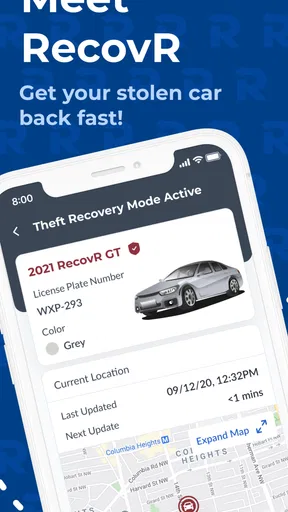
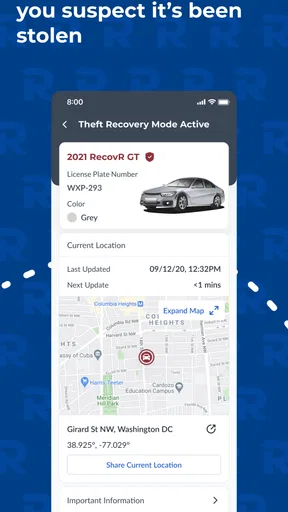
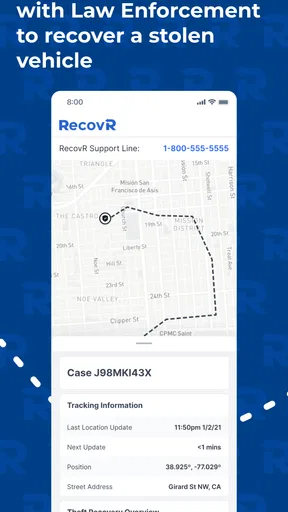
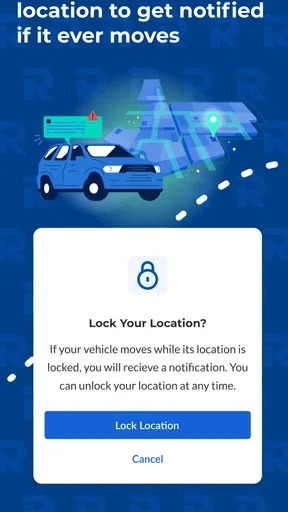
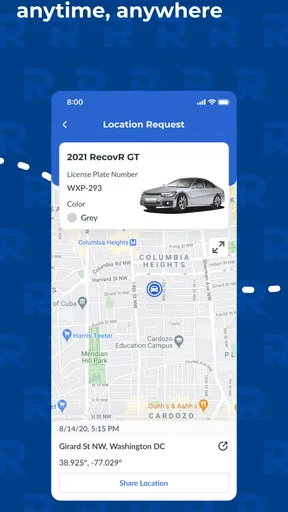
Our Review of RecovR: Vehicle Theft Recovery
 Analysis by Appyee
When I look at RecovR, I see a focused tool rather than a general driving companion. It is built for cars that already have a RecovR locator, and its purpose is to help an owner locate the vehicle and support theft recovery. That narrow purpose is important: the app is not trying to replace navigation, maintenance tracking, fuel logging, or a full insurance service. In my experience, its value depends first on the physical locator being installed and working properly.
I would recommend it to someone who wants a simple way to keep an eye on a valuable, frequently parked, or occasionally borrowed vehicle. I would not recommend downloading it expecting the app alone to track any car. The software is the viewing and control layer for the RecovR device, so the complete setup matters more than the app icon on the phone.
How RecovR feels in everyday use
The current app sits in the Auto & Vehicles category and is developed by RecovR. It is free to install, has an Everyone age rating, and the current version is 1.73.0. Those details make it approachable for households where more than one person may need access to vehicle-location information, although the practical experience will still depend on the locator, the vehicle, and the phone being used.
The first thing I would do after installing it is treat setup as a security task, not just a normal app registration. I would keep the account details private, make sure the vehicle shown in the app is the correct one, and test the location workflow while the car is parked somewhere familiar. That simple test can prevent confusion later, especially if the first real use happens when the vehicle is missing.
For ordinary ownership, the app is most useful as a quiet background safeguard. You may not open it every day. Instead, you install it, confirm that the car is represented correctly, and return to it when you need reassurance about where the vehicle is or when you need to begin a recovery process. That makes its usefulness less about screen time and more about whether it is ready at the moment it matters.
A realistic situation where it earns its place
Imagine lending your car to a family member for an evening. You are not trying to follow every movement, but later you realize the vehicle has not returned when expected. With a locator-based app, the first practical step is to open the vehicle view and check the most recent available position before making assumptions. If the car is at the agreed destination, the issue may simply be a delayed return. If it is somewhere unexpected, you have a clearer starting point for contacting the driver or taking further action.
I also see value for people who regularly leave a vehicle in large public areas, use a second car only occasionally, or own a vehicle that is especially costly to replace. In those cases, remembering the exact parking spot is useful, but the theft-recovery purpose is the stronger reason to keep the app ready. It gives the owner a dedicated place to begin rather than relying on scattered notes, memory, or a generic tracking workaround.
What the app is not
It is worth setting expectations correctly. RecovR is not a universal tracker that can locate a car without its matching locator. It is also not the same as a phone-based parking app, where the phone records where you left the vehicle. That distinction changes the situations in which it works. A parking reminder helps you find your car after shopping; a theft-recovery system is intended to remain associated with the vehicle itself.
That difference also means I would not use RecovR as my only answer to every vehicle-security problem. Physical locks, sensible parking, keeping keys protected, and contacting the appropriate authorities still matter. The app can provide useful location information, but it does not turn a vulnerable vehicle into an invulnerable one.
Product evolution and what the current version means
The app was released on April 18, 2021, and its current version is 1.73.0. That progression suggests an established product rather than a first experimental release. I see the version history as a reason to expect ongoing refinement of the app experience, but not as proof that every possible vehicle, phone, or network situation will behave perfectly.
For an existing user, a current release is especially relevant because locator apps sit between several moving parts: the phone operating system, the account, the vehicle device, and the communication path used to report location. Keeping the application updated is therefore sensible. It reduces the chance that an old installation becomes the weak link when you need to check the car.
At the same time, I would separate verified progress from assumptions about future capability. A newer version does not automatically mean live tracking, broader hardware compatibility, faster updates, or a redesigned theft workflow. Those are the kinds of improvements I would want to see explained directly in release notes before relying on them. For now, I judge the app by its core role: connecting an owner with a RecovR-equipped vehicle.
What changes for people who already use it
If you already have the app installed, the sensible routine is not complicated. Update it when a new version is available, open it occasionally when the vehicle is safely nearby, and confirm that the account still displays the expected car. This is a small maintenance habit, but it is more valuable than waiting until a stressful incident to discover that you no longer remember the login or that the wrong vehicle is selected.
I would also make sure every authorized household user understands what the location information means. A displayed position is a starting point for verification, not a substitute for judgment. If a vehicle appears somewhere unexpected, contact the driver first when that is safe and reasonable. If theft is suspected, use the information responsibly and involve the relevant authorities rather than attempting a personal confrontation.
One non-obvious advantage of this approach is that it separates vehicle access from the driver’s phone. If a car is borrowed, sold temporarily, or used by someone who does not have the app, the owner can still retain the central account relationship. That is more practical than depending on a driver to remember to share a phone location every time the vehicle changes hands.
Three habits that make the setup more useful
First, test the complete chain after installation: open the app, identify the vehicle, and compare the displayed location with where the car actually is. Do this before you need it. A simple baseline gives you confidence that you are looking at the correct vehicle and not an old account entry.
Second, decide in advance who should have access. A theft-recovery tool can become confusing if several people use different accounts or if nobody knows which login is current. I would keep a secure record of the account details and agree with other owners on who will check the app if the vehicle cannot be found.
Third, use the app as an evidence-gathering step, not as a reason to delay action. If the vehicle is genuinely missing, note the location shown, the time you checked it, and any relevant circumstances before contacting the appropriate authorities. That creates a clearer handoff and avoids repeatedly opening the app without a plan.
Where it compares well with familiar alternatives
The usual alternative for casual parking is a phone’s built-in location memory. That works well when the problem is simply forgetting where you parked, but it depends on the phone traveling with you and recording the parking event. RecovR is aimed at the vehicle, which makes it more appropriate when the car is borrowed, moved without you, or taken while your phone remains at home.
Another alternative is a general Bluetooth tag. Tags can be useful for nearby discovery and for items that move with a person, but they are not automatically equivalent to a dedicated vehicle locator. Their usefulness can depend heavily on nearby compatible devices and the way the owner uses them. RecovR makes more sense when the goal is a vehicle-specific recovery workflow rather than attaching a general-purpose tag to a key ring.
Some drivers may also consider a full telematics or dash-camera system. Those products can offer a wider set of driving or vehicle functions, but they may be more complicated, more expensive, or less focused. RecovR’s appeal is its narrower job. If all you want is a straightforward connection to a RecovR locator, a larger system could feel like unnecessary equipment. If you want driving footage, diagnostics, or detailed trip analysis, a broader vehicle platform may be a better fit.
The trade-off is that a focused app cannot compensate for missing hardware. Someone looking for a free, phone-only way to locate any vehicle should skip this one. Someone who already owns or plans to use a RecovR locator may appreciate that the app does not bury the recovery purpose under unrelated features.
Who should use it and who should pass
I think RecovR is a good match for owners of high-value vehicles, families sharing one car, people who lend vehicles regularly, and drivers who want a dedicated theft-recovery connection. It may also suit an owner who uses a car infrequently and wants a standing safeguard rather than a daily driving dashboard.
I would pass if you only need a reminder of where you parked, if you do not have a RecovR locator, or if you expect the app to provide every feature found in a complete fleet-management system. I would also be cautious if you are unwilling to maintain account access and occasionally verify the setup. Security tools are only helpful when the owner can actually use them under pressure.
The average rating is 3.6 from around a hundred ratings, with several dozen written reviews, while the app has passed fifty thousand installs. I read those figures as evidence of a real but specialized user base, not as a reason to assume universal satisfaction. A rating in that range tells me the core idea is useful to many people, while setup, hardware dependence, and individual expectations may strongly affect the experience.
Remaining gaps and practical friction
The biggest limitation is built into the product model: the app cannot do its job without the associated locator. That creates an extra installation and ownership step compared with a phone-only solution. It also means troubleshooting may involve more than reinstalling the app. The account, the physical device, the vehicle, and the phone all need to align.
I would not describe this as a casual app for people who want instant results without preparation. The best time to learn the workflow is when the car is safe and nearby. If you wait until a vehicle is missing, even a small login problem or uncertainty about which screen to use can feel much larger than it would during a calm test.
There is also a human limitation that technology cannot remove: a location is not the same as a guaranteed recovery. A vehicle may be moving, parked in a difficult area, or associated with circumstances that require professional handling. I would never advise confronting a suspected thief based only on an app display. The responsible value of the tool is helping you provide clearer information to the people who can act safely.
Privacy is another consideration for shared vehicles. Location access can be helpful for recovery, but it can also create tension if drivers do not understand who can view the vehicle’s position. Before adding family members or lending the car, I would agree on the purpose of access and avoid treating a recovery tool as an excuse for constant personal surveillance.
Questions I would settle before relying on it
Can it locate a car without a RecovR locator? I would treat the answer as no for practical purposes. The app is designed around a RecovR-equipped vehicle, so installing the software alone does not create a tracking system.
Is it useful if several people drive the same car? Yes, provided the account and access arrangement are clear. The owner should decide who needs access, and everyone should know which vehicle entry is correct. That is more reliable than creating a new informal tracking method every time the car is borrowed.
Does a free app mean the whole solution is free? No assumption like that is safe. The application itself is free, but the experience is tied to the RecovR locator setup. I would consider the hardware and ownership arrangement separately from the download.
Should it replace a police report or other recovery action? No. I would use the displayed information to support a report and follow official guidance. The app can help establish where to begin looking, but it is not a substitute for authorities, insurance procedures, or personal safety.
Will it suit someone who wants detailed driving analytics? Probably not as a first choice. Its identity is vehicle theft recovery and locating, so a telematics product designed around trips, driver behavior, or diagnostics would be more appropriate for that broader purpose.
What I would watch as the app develops
For future releases, I would pay attention to improvements that reduce uncertainty during stressful moments. Clearer recovery guidance, dependable vehicle selection, transparent status information, and a smoother path from location check to responsible reporting would matter more to me than decorative interface changes.
I would also watch how the app handles existing users as phone operating systems and vehicle hardware change. Because this is a connected product, compatibility and continuity are important. A release that keeps the core workflow stable while making account recovery and device verification easier would have a direct benefit for owners who may open the app only occasionally.
Another area worth watching is how clearly the product distinguishes a recent location from an actively updated one. That distinction affects decisions, especially when a vehicle is moving. I would value plain language that helps users understand what they are seeing without encouraging false precision or risky action.
My current view is favorable but deliberately practical. RecovR is not a universal car app, and it is not a magic theft-prevention device. It is a specialized companion for a RecovR locator, and that specialization is its main strength. When the hardware is installed, the account is maintained, and the owner has practiced the basic workflow, it offers a sensible starting point for locating a vehicle and responding to a worrying situation.
My recommendation is simple: choose RecovR when your priority is a dedicated vehicle-recovery connection, not a full driving dashboard. I would install it for the right hardware setup, test it before an emergency, keep access organized, and treat every location result as useful information rather than permission to take risks. For that specific job, it is a worthwhile free app; for anything broader, I would compare it with a more complete vehicle system before committing.
Verdict
Strengths of RecovR: Vehicle Theft Recovery
- Helps organize vehicle details and recovery information in one place.
- Can make essential data easier to share with authorities or recovery teams.
- Useful as a preparedness tool before a vehicle theft occurs.
- May reduce stress by providing a clear recovery process.
- Supports quick access to important vehicle-related records.
Limitations of RecovR: Vehicle Theft Recovery
- Its usefulness depends on keeping vehicle and contact details up to date.
- Recovery results may vary based on local authorities and service coverage.
- Some features may require location, notification, or other device permissions.
- It cannot guarantee that a stolen vehicle will be recovered.
- Users may need to verify whether the service operates in their region.
Similar Picks in This Category
View All
Android Auto
Google LLC4.1

maxim — order a taxi & food
PT. SITO4.7

Штрафы ГИБДД: проверка с фото
Pays LLC – Штрафы ГИБДД4.7

Номерограм – проверка авто
Авто Ассист4.8

Дром Авто
Дром4.9

Frequently Asked Questions
What is RecovR: Vehicle Theft Recovery, and how does it work?
RecovR: Vehicle Theft Recovery is a vehicle-tracking and recovery service designed to help locate a car if it is stolen. After the compatible device is installed and activated, the owner can use the accompanying app to view the vehicle’s location and receive relevant alerts. Its effectiveness depends on proper installation, an active service plan, cellular coverage, GPS availability, and the device remaining powered and connected.
Does RecovR require a subscription or additional fees?
The app itself may be free to download, but RecovR’s tracking features generally depend on an eligible device, an activated account, and a service plan. Pricing, activation charges, included features, and renewal conditions can vary according to the provider, retailer, vehicle package, or promotion. Before purchasing or installing it, review the current terms carefully so you understand recurring costs and cancellation requirements.
Can RecovR locate my vehicle anywhere, even if it is underground or outside cellular coverage?
RecovR is not guaranteed to provide a location in every environment. GPS accuracy can be reduced inside parking garages, tunnels, dense urban areas, or places with obstructed satellite signals. The device also relies on communication networks to send information to the app, so updates may be delayed or unavailable when cellular service is weak. Location results should therefore be treated as helpful tracking information, not an absolute guarantee.
What should I do if my vehicle is stolen after using RecovR?
If your vehicle is stolen, contact law enforcement immediately and provide the vehicle details, tracking information, and any location shown in the RecovR app. Do not attempt to recover the vehicle yourself or confront suspected thieves. Depending on the service and situation, the provider may offer assistance or share information with authorities, but users should follow the official theft-reporting process and keep their account and contact details up to date.
Is RecovR compatible with every vehicle and smartphone?
Compatibility is not necessarily universal. Vehicle requirements may depend on the installation method, electrical system, model year, device version, and the service provider offering RecovR. The mobile application also requires a supported Android or iOS version, along with internet access and permission to use features such as notifications and location-related data. Check the current compatibility list before downloading or buying the tracking device.
